From Weekend Warriors to Pro Athletes: How Advanced Imaging Accelerates Sports Injury Recovery
How ultrasound and X-rays help accurately diagnose and treat athletic injuries, ensuring a safe return to play.
Whether you are a professional athlete competing on a national stage or a weekend warrior enjoying a Saturday morning football match in Abuja, sports injuries are an unfortunate but common reality. When an injury occurs, the immediate focus is always on recovery. However, effective rehabilitation cannot begin without a precise and accurate diagnosis.
In the realm of sports medicine, guessing the extent of an injury based on physical symptoms alone is a recipe for prolonged recovery and potential re-injury. This is where advanced medical imaging plays an indispensable, front-line role. By allowing us to look beneath the skin, imaging provides the definitive answers needed to formulate a targeted treatment plan.
For bone-related injuries, such as suspected fractures, stress fractures, or joint dislocations, digital X-rays remain the gold standard. They provide immediate, high-resolution images of the skeletal structure, allowing physicians to quickly confirm a break and determine its severity. Modern digital X-rays also expose the patient to significantly less radiation than older film technologies.
However, the vast majority of sports injuries do not involve bones; they involve soft tissues—muscles, tendons, and ligaments. Sprains, strains, and tears are the most common culprits keeping athletes off the field. While X-rays are excellent for bone, they offer very little visibility into these crucial soft tissue structures.
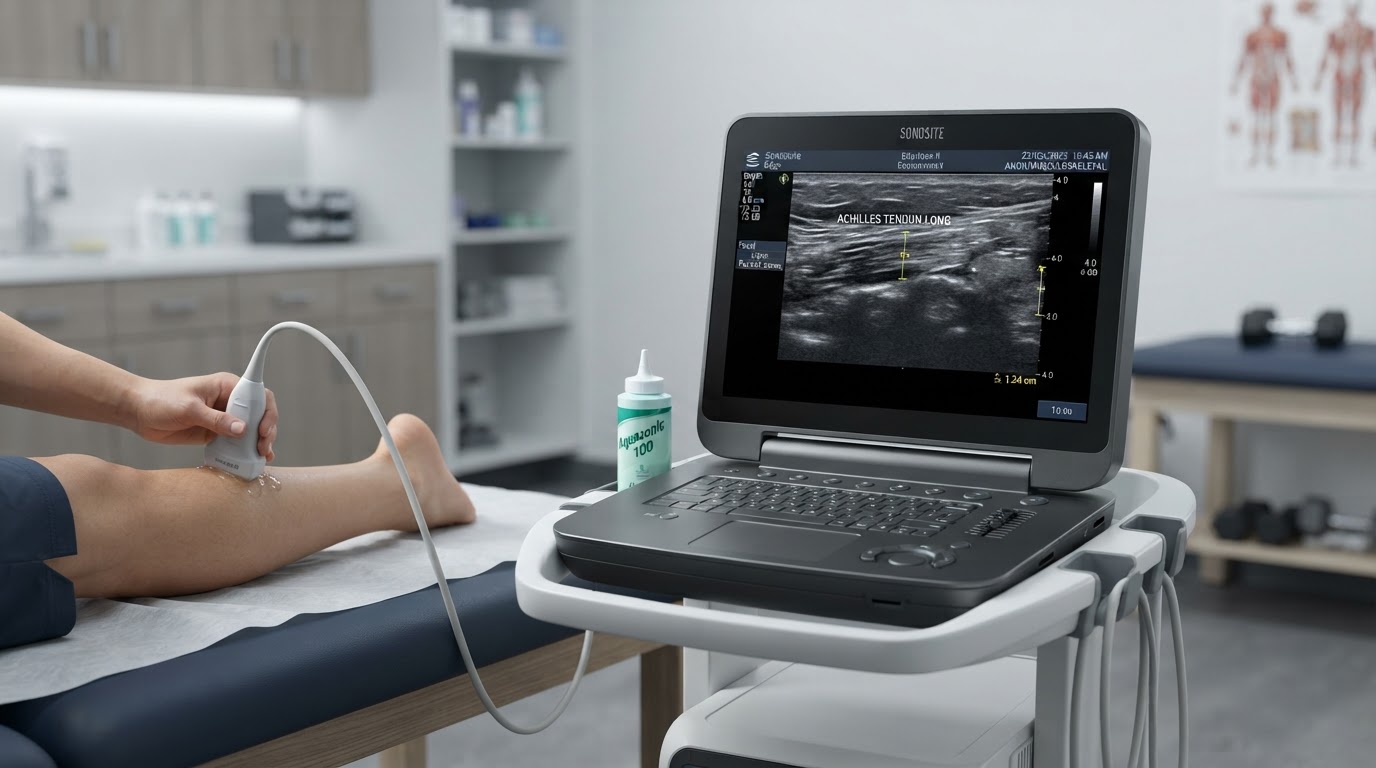
This is where musculoskeletal (MSK) ultrasound shines as a revolutionary tool in sports diagnostics. Unlike an MRI, which requires the patient to lie perfectly still in a confined tube, MSK ultrasound is a dynamic imaging modality. It allows the radiologist to view the muscles and tendons in real-time motion as the patient moves the affected joint.
This dynamic capability is invaluable. A tendon tear or a muscle impingement might only be visible when the joint is in a specific position. MSK ultrasound can pinpoint the exact location and extent of inflammation, fluid accumulation, or tearing with remarkable precision. Furthermore, it is completely radiation-free and much more accessible than an MRI.
Beyond diagnosis, ultrasound is also increasingly used to guide therapeutic interventions. If an athlete requires a localized steroid injection to reduce inflammation or a platelet-rich plasma (PRP) treatment to accelerate healing, ultrasound guidance ensures the needle is placed with pinpoint accuracy, maximizing the treatment's effectiveness.
Prompt and accurate imaging is the cornerstone of sports medicine. It ensures that athletes receive the correct treatment protocol from day one, minimizing downtime, preventing chronic issues, and safeguarding against further injury upon their return to physical activity.
At Crescent Radiology, our advanced imaging suite is fully equipped to handle the diagnostic needs of active individuals. If you suffer a sports injury, do not attempt to simply 'walk it off.' Seek a professional evaluation and insist on accurate medical imaging. A precise diagnosis is your fastest ticket back to the game.
Related Articles
The Dawn of AI in Diagnostics: How Machine Learning is Revolutionizing Medical Imaging
Read Article
The Digital Radiography Revolution: Seeing Clearer, Faster, and Safer Than Ever Before
Read Article